This summer has been a lot, and not in a good way. Europe has already endured four major heatwaves since May. That’s one every few weeks, each one breaking records set by the last. Western Europe experienced its warmest June ever recorded, with an average temperature of 20.74°C, more than 3 degrees above the 1991–2020 average for the month. Barcelona hit 40.7°C in July. F.Y.I., that’s the highest in 112 years. The Czech Republic hit 41.9°C — a national record. Paris pharmacies displayed 43°C on their outdoor thermometers.
More than 135 million people across the continent faced temperatures above 35°C at the height of the summer’s third heatwave alone. Thousands of excess deaths have been recorded. Transport systems have buckled. Hospitals have been strained. And scientists are saying plainly what the data has been showing for years: Europe is the fastest-warming continent on Earth, heating at twice the global average, and extreme heat is no longer a once-in-a-generation event. It’s the new summer.
For building owners and facility managers operating in this environment, the question isn’t whether to take heat management seriously. It’s how. And that answer is more complicated in Europe than it might look.
The European Problem with the Obvious Answer
The instinct is to install air conditioning. And for many buildings and facilities, that’s absolutely the right call. But across much of Europe, it’s not as simple as calling an HVAC contractor and scheduling a job.
Only about 20% of European homes and buildings currently have air conditioning. Compare that to nearly 90% in the United States. Many factors explain that gap, and most are structural rather than cultural. The continent’s building stock is old. Many structures were built centuries before air conditioning existed. They have thick stone walls, small windows, and no infrastructure for ductwork, refrigerant lines, or modern electrical loads. Drilling through fortress-grade stone to run conduit is not a quick job, and in many cases it’s not a cheap one either, with installation costs reaching €1,000 or more per unit before ongoing energy costs are factored in.
Regulatory barriers add another layer. In France and the UK, rules around preserving the appearance of historic buildings can restrict or complicate exterior HVAC installations. Some cities have additional permit requirements. And with running costs in Europe roughly two to three times higher than in the U.S. because of electricity pricing, the ongoing burden of air conditioning is real. This is particularly true for smaller commercial operators and facilities in older urban buildings.
None of this means air conditioning isn’t worth pursuing. It means that for many building owners across Europe right now, full AC installation is either not immediately feasible or not the only answer. Which is where the conversation about passive and protective heat management gets a lot more interesting.
What European Buildings Are Actually Up Against
Here’s the thing about a heatwave and a building: the building itself becomes part of the problem. Rooftops, exterior walls, and metal surfaces absorb solar radiation throughout the day and transfer that heat inward. This raises indoor temperatures, increasing the load on any cooling systems that do exist, and making spaces progressively less livable or workable as the afternoon wears on.
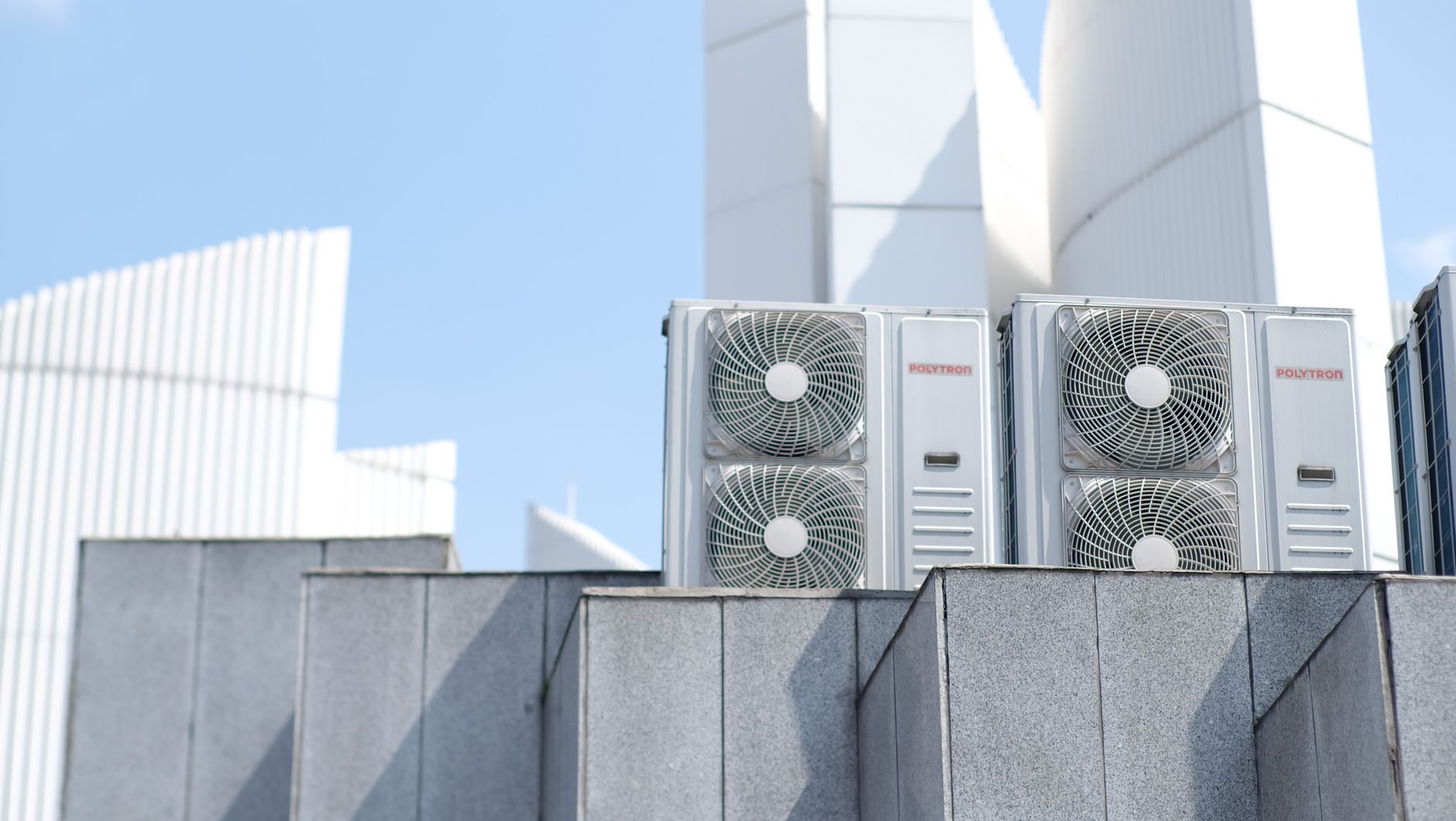
For facilities with existing HVAC, this is an efficiency crisis. The system has to work much harder to compensate for a building envelope that actively absorbs and radiates heat. Rooftop units in direct sun can see exterior surface temperatures hit 180°F (82°C), even on days when ambient air is far cooler. These temperatures force compressors to run longer, consume more energy, and wear out faster. The European Environment Agency has noted that buildings designed primarily for warmth retention, standard in northern and western Europe, become particularly vulnerable when heat is the threat instead of the cold.
For facilities without adequate cooling, the situation is worse. Solar heat gain through the building envelope drives indoor temperature spikes, and a reflective coating can directly address it.
A Practical Intervention for a Complicated Problem
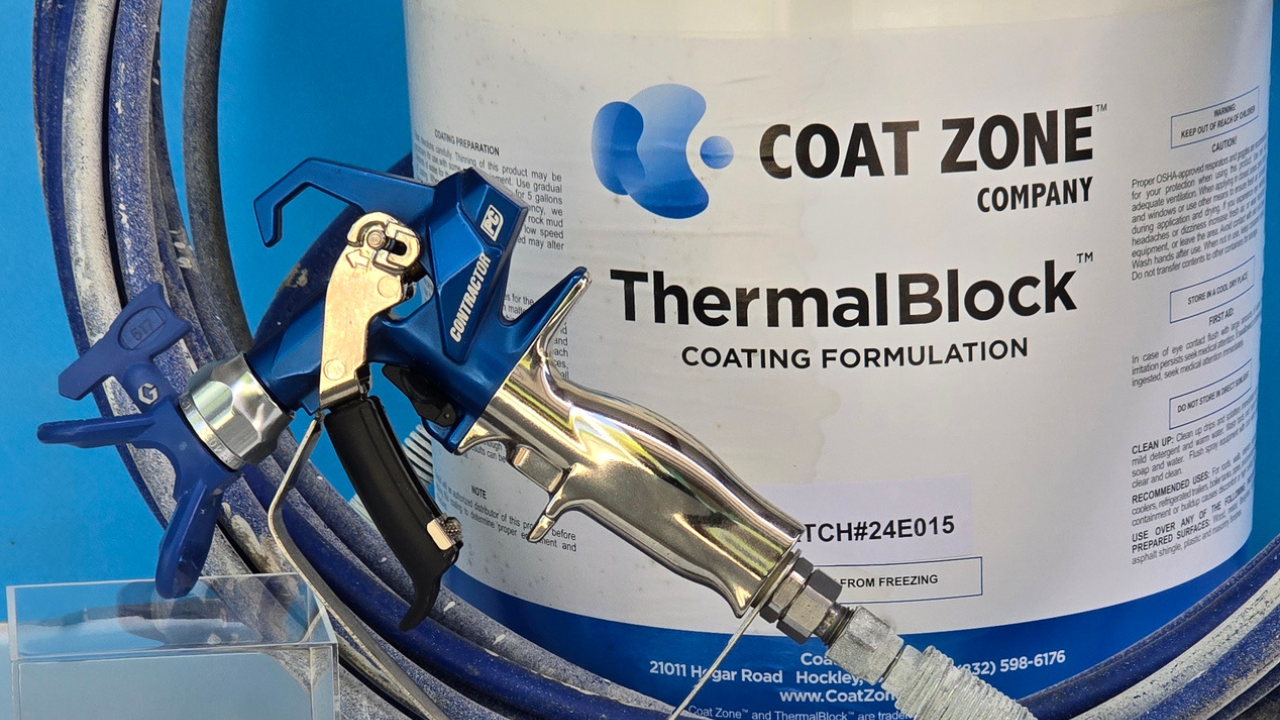
ThermalBlock® (or ThermalBlock by Coat Zone®) coating is a CRRC-certified radiant barrier coating applied to exterior rooftop surfaces. These include HVAC cabinets, air handlers, exposed ductwork, and rooftop panels. It blocks solar heat before it enters the system or the building, rather than trying to remove it after the fact.
Independent testing verifies the performance numbers: ThermalBlock® (or ThermalBlock by Coat Zone®) coating blocks up to 93% of solar heat gain, reduces treated surface temperatures to within 10°F (5.5°C) of ambient air even under peak summer conditions, and has a Solar Reflective Index of 112 (initial) and 100 (three-year aged). That SRI was confirmed by the Cool Roof Rating Council. Its solar reflectance of 0.89 and thermal emittance of 0.87 mean it both reflects incoming radiation and efficiently releases any heat it does absorb, rather than holding it and transferring it inward.
For facilities in Europe dealing with the current heat crisis, ThermalBlock® (or ThermalBlock by Coat Zone®) coating offers a few specific advantages over full AC installation as either a complement or a bridge solution:
- It requires no structural modification, no ductwork, and no change to electrical infrastructure
- It can be applied to new or existing surfaces in the field, with a water-based, low-VOC formulation and rapid cure time
- It carries a 10-year warranty and has no meaningful maintenance burden after application
- Where HVAC systems do exist, it reduces their run time and energy consumption, which lowers operating costs and extends equipment life by up to 30%
- Where HVAC is limited or absent, it reduces the heat load entering the building envelope through rooftop surfaces, keeping indoor temperatures more stable during peak heat hours
That last point matters particularly for facilities in older European buildings where the roof and upper floors become the primary heat absorption point on a 40°C day. Reducing solar heat gain at the source is not a replacement for cooling, but it’s a meaningful, fast, low-disruption intervention that can make a real difference in how a building performs during a heatwave.
Where This Fits in a Broader Heat Strategy
The World Resources Institute has noted that cities need to pair efficient cooling with passive solutions like reflective materials, green roofs, tree cover, and climate-smart building design in order to manage heat without simply driving up emissions. ThermalBlock® (or ThermalBlock by Coat Zone®) coating fits squarely in that passive-solution category. It doesn’t consume electricity, release heat into urban environments, or create a new energy burden. It just stops solar heat from becoming an indoor problem in the first place.
For facility managers and building owners making heat management decisions right now, whether in the middle of this summer or in preparation for the ones that follow, ThermalBlock® (or ThermalBlock by Coat Zone®) coating is a practical, accessible starting point that works alongside whatever other cooling strategy is in place or under consideration.
The heatwaves are not slowing down. In the 50 years since Europe’s historic 1976 heatwave, the continent has warmed by around two degrees. The records being set this summer suggest that pace is accelerating, not stabilizing. The buildings that manage this well in the coming decades will be the ones where someone made a practical decision to address solar heat load today.
Interested in how ThermalBlock® (or ThermalBlock by Coat Zone®) coating can help your facility manage heat more effectively? Contact us to learn more.
Citation List
- Cool Roof Rating Council. “Notification of Product Rating: ThermalBlock™, Coat Zone Inc.” June 10, 2026. coolroofs.org
- UNRIC. “Europe Heatwave 2026: WMO Warns of Rising Extreme Heat.” July 2026. unric.org
- Euronews. “June 2026 Broke Heat Records Across Europe and Oceans, EU Climate Data Reveals.” July 9, 2026. euronews.com
- CNN Climate. “Western Europe Has Hottest June and July on Record.” August 10, 2026. cnn.com
- Al Jazeera. “Europe Swelters in Latest Wave of Extreme Heat.” August 13, 2026. aljazeera.com
- Al Jazeera. “More Than 1,300 Deaths in Europe Amid Heatwave.” June 29, 2026. aljazeera.com
- Time. “Why Is Europe So Ill-Equipped to Handle Heat Waves?” June 25, 2026. time.com
- CNN. “European Summers Are Getting Brutally Hot. So Why Is Air Conditioning So Rare?” June 23, 2026. cnn.com
- Ynetnews. “Europe Air Conditioning Debate Reignites as Historic Heatwave Deaths Mount.” June 28, 2026. ynetnews.com
- Carbon Brief. “Eight Facts About Air Conditioning Amid an Overheated Global Debate.” July 10, 2026. carbonbrief.org
- World Resources Institute. “Europe’s Soaring Heat and the Great Air Conditioning Dilemma.” June 30, 2026. wri.org
- European Environment Agency. “Cooling Buildings Sustainably in Europe.” eea.europa.eu
- ScienceInsights. “Why Doesn’t Europe Have Air Conditioning?” March 29, 2026. scienceinsights.org