
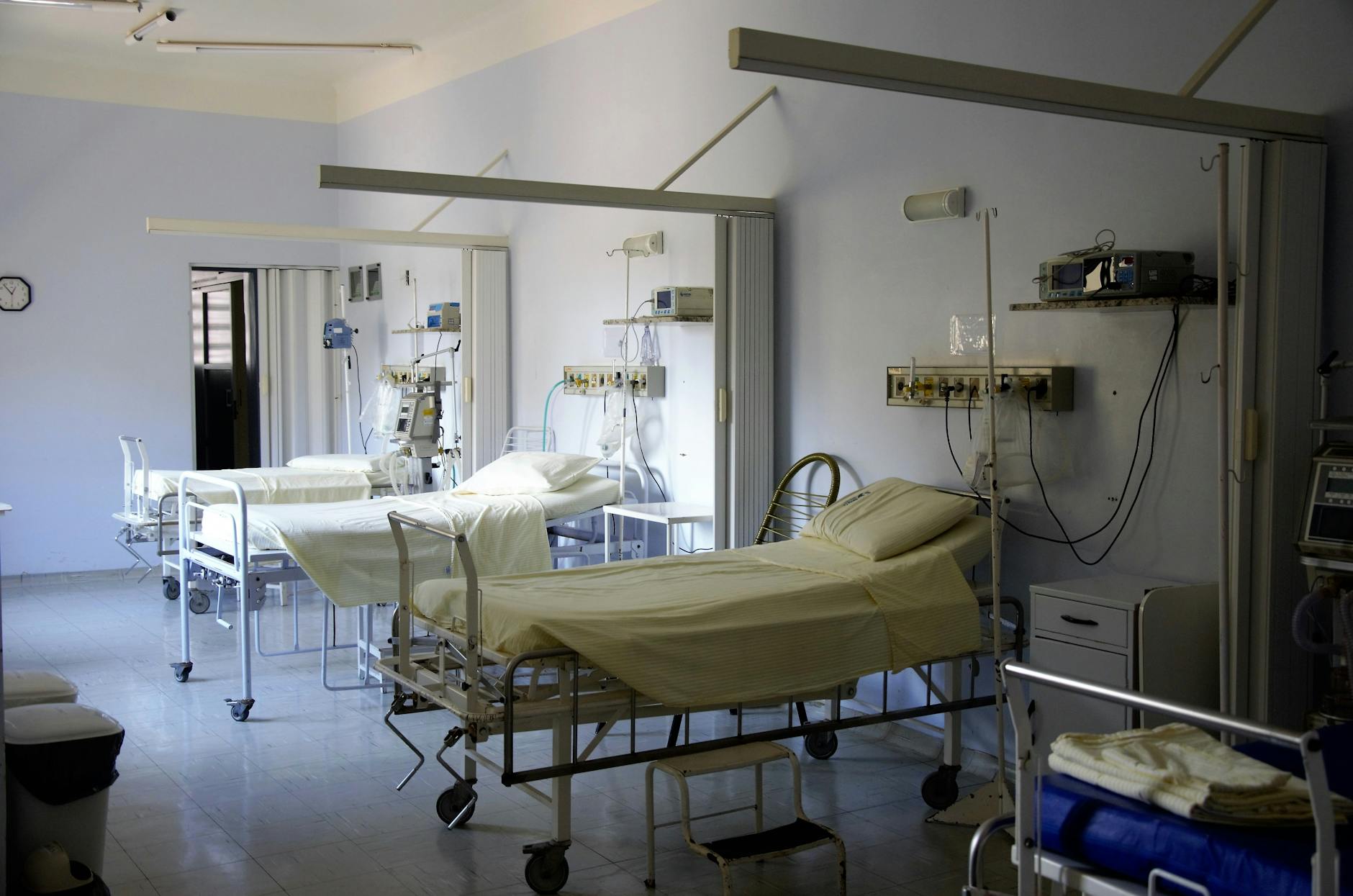
The Hidden Risk You Can’t Afford to Ignore
In most commercial buildings, an HVAC failure is an inconvenience. In a hospital, it is a crisis. The moment a ventilation system falters in an operating room, an isolation ward, or an intensive care unit, the consequences can cascade quickly. This includes compromised sterile fields, disrupted air pressure relationships, canceled procedures, and patients placed at elevated risk of infection. For healthcare facility managers, preventing that scenario is not simply a maintenance priority. It is a clinical and regulatory imperative.
Understanding what drives HVAC deterioration and how to stop it before it becomes downtime is one of the most impactful investments a hospital facility team can make.
What’s Actually at Stake When Hospital HVAC Fails
Hospital HVAC systems do far more than regulate temperature. They maintain precise positive and negative pressure relationships that prevent airborne pathogens from migrating between spaces. The systems control humidity levels that inhibit mold and microbial growth. They filter particulates from air circulating through surgical suites, immunocompromised patient rooms, and neonatal units. When these systems degrade or fail, the clinical consequences are direct and documented.
Research shows that inadequate ventilation and contaminated HVAC systems are associated with elevated rates of hospital-acquired infections (HAIs). One analysis noted that 86% of healthcare-associated infection outbreaks involve HVAC-related factors, such as pressure-differential failures. HAIs affect approximately 1 in 31 hospital patients on any given day, and airborne transmission pathways represent a significant and preventable component of that risk.
The regulatory consequences are equally serious. HVAC compliance failures are among the most frequently cited deficiencies in Joint Commission surveys. These failures appear in infection prevention findings at the majority of hospitals reviewed. When systems fail to meet ASHRAE Standard 170 requirements, which govern air change rates, pressure relationships, filtration, temperature, and humidity for over 60 distinct healthcare space types, facilities face Joint Commission citations, CMS reimbursement penalties, and potential loss of accreditation. In the most severe cases, patient transfers become necessary until the system is restored.
The financial dimension is stark. Emergency HVAC repairs in healthcare settings cost 50–100% more than planned maintenance. HVAC downtime due to critical system failures can cost hospitals up to $100,000 per hour when surgeries are disrupted and critical care operations are compromised.
The Root Causes of Hospital HVAC Deterioration
Most HVAC failures do not happen suddenly. Physical degradation of system components drives failures. This goes unaddressed until performance drops to a critical threshold. In hospital environments where rooftop equipment faces extreme heat, humidity, UV radiation, and coastal or industrial air, two failure pathways are especially common.
Coil corrosion and fouling. Heat exchanger coils are the efficiency engine of any HVAC unit. Over time, corrosion, biological fouling, and degradation of the fin-to-tube bond reduce heat transfer performance. This forces systems to run longer and harder to maintain the required temperatures and air change rates. Degradation is rapid and severe in environments that expose evaporator coils to moisture, biological loading, and airborne contaminants. These environments are routinely found in healthcare settings.
Solar-driven thermal overload. Rooftop air handlers and ductwork in hospital buildings are exposed to direct solar radiation. The exposure can drive exterior cabinet temperatures to 180°F or higher. When ductwork insulation fails, as it inevitably does after years of weather exposure, supply air temperature losses of 10°F or more become common. The failure then strains system capacity and makes it difficult to maintain the precise climate conditions that clinical areas require.
A Real-World Example: Kindred Hospital, San Antonio
Kindred Hospital in San Antonio, a four-story long-term acute care facility, experienced exactly this scenario. Approximately 5,000 linear feet of rooftop ductwork had insulation that had failed from prolonged elemental exposure, deteriorating to the point of falling off the ducts entirely. The result was a 14°F temperature loss in the supply air stream. This significant temperature loss makes it difficult to maintain consistent indoor temperatures during peak cooling demand. It also strongly impacts both patient comfort and HVAC system performance.
Coat Zone® dealer Energy Performance Solutions removed the failed insulation, cleaned and prepared the duct surfaces, and applied ThermalBlock™ (or ThermalBlock by Coat Zone®) as a sealed, weather-resistant barrier. The outcome: supply air temperature loss was reduced from 14°F to just 3°F, the facility regained the ability to maintain comfortable and consistent temperatures throughout the building, and ongoing energy savings have continued month over month since application.
Two Coatings Purpose-Built for the Stakes Hospital HVAC Demands
Coat Zone® develops high-performance protective coatings designed to address the exact failure modes that drive HVAC downtime. For healthcare facilities, two products are particularly relevant.
CoilSafe® Plus™: Antimicrobial Coil Protection for High-Stakes Environments
CoilSafe® Plus™ is an ultra-thin inorganic coating applied to HVAC evaporator coils to prevent corrosion, fouling, and microbial growth. Unlike standard coil coatings, CoilSafe® Plus™ incorporates an advanced silver-ion antimicrobial agent that actively combats mold, bacteria, and viruses directly on the coil surface. In a clinical environment where the coil is a potential vector for biological contamination of the air supply, this distinction matters.
Testing performance includes:
- 99.5% reduction in bacteria over 24 hours (ISO 22196)
- 99.8% reduction in SARS-CoV-2 over 24 hours (ISO 21702:2019)
- Zero fungal growth in ASTM G21 testing
- 6,000+ hours of salt fog corrosion resistance (ASTM B117)
- Flame rating of 0, Smoke rating of 0 (ANSI/UL 723)
- Restores units to 90–95% efficiency by reestablishing the fin-to-tube bond and improving heat transfer
At just 8 to 15 microns thick, CoilSafe® Plus™ applies without reducing airflow or heat transfer performance, and its glass-like inorganic surface repels moisture, oils, and debris. The coating helps keep coils cleaner between service intervals and reduces the frequency of maintenance events that themselves carry infection control risks in occupied clinical environments.
ThermalBlock™ (or ThermalBlock by Coat Zone®): Protecting Ducts and Cabinets from Solar Degradation
ThermalBlock™ (or ThermalBlock by Coat Zone®) is a high-performance radiant barrier coating applied to rooftop HVAC cabinets, air handlers, and ductwork. It blocks up to 93% of solar heat gain, reducing surface temperatures to within 10°F of ambient, even in direct summer sun. Its Solar Reflective Index of 108 confirms performance across real-world temperature and wind conditions, not just laboratory baselines.
For hospital facility managers, ThermalBlock™ (or ThermalBlock by Coat Zone®) directly addresses the ductwork insulation failure scenario illustrated at Kindred and prevents it from developing in the first place on treated equipment. By reducing thermal stress on rooftop systems, ThermalBlock™ (or ThermalBlock by Coat Zone®) also extends equipment lifespan by up to 30%, reducing the frequency of capital replacement cycles and the operational disruptions they generate.
Both coatings can be applied to new or existing equipment, in the field or at a coating center, with low-VOC formulations and rapid cure times that minimize disruption to active clinical operations.
Proactive Protection Is a Patient Safety Strategy
Hospital facility managers operate in an environment where the gap between a maintenance decision and a patient outcome is measured in hours. HVAC systems that degrade due to coil corrosion, ductwork insulation failure, or solar-driven thermal stress eventually reach a failure threshold that no reactive repair can address quickly enough to prevent clinical disruption.
CoilSafe® Plus™ and ThermalBlock™ (or ThermalBlock by Coat Zone®) from Coat Zone® extend that threshold significantly by keeping equipment performing closer to specification for longer, reducing emergency repair exposure, and supporting the continuous, compliant HVAC performance that hospitals cannot function without.
Contact Coat Zone® to learn how our coatings are protecting healthcare HVAC systems and supporting facility managers who understand that downtime is never an option.
Citation List
- OxMaint. “Hospital HVAC Maintenance: Ensuring Patient Safety and Regulatory Compliance.” March 12, 2026. oxmaint.com
- OxMaint. “Hospital Facility Maintenance Checklist for Compliance and Safety.” March 12, 2026. oxmaint.com
- Oklahoma Chiller. “HVAC Pump Maintenance For Hospitals and Healthcare Facilities.” July 28, 2025. okchiller.com
- Iron Mechanical. “The Vital Role of HVAC and Plumbing Systems in Healthcare Facilities.” September 2, 2025. ironmechanical.com
- Alertify. “The Hospital Air Quality Compliance Checklist Every Administrator Needs.” alertify.io
- National Institutes of Health / PubMed Central. “Effects of Air-Conditioning Systems in the Public Areas of Hospitals: A Scoping Review.” ncbi.nlm.nih.gov
- ASHRAE. “Chapter 9: Health Care Facilities.” ASHRAE Handbook — HVAC Applications. ashrae.org