
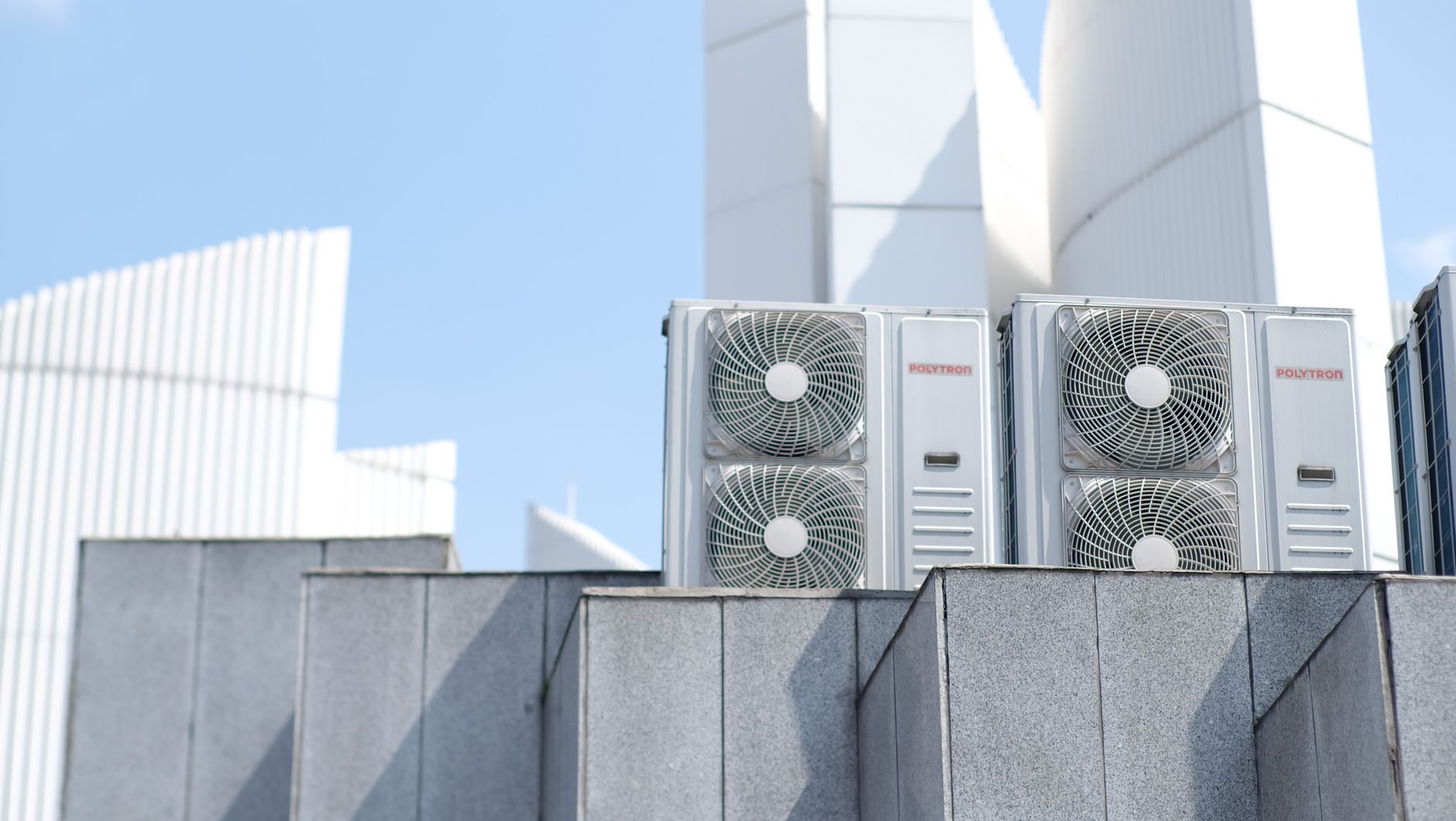
If you’ve ever Googled this question while staring at a 15-year-old rooftop HVAC unit, you’ve probably seen the same answer over and over: 15 to 20 years. And that’s a fair starting point. But it’s also kind of like saying “the average person lives to 77.” True on paper, but not all that useful once you start asking why some people (and some HVAC systems) make it well past that, while others don’t.
Let’s break down what the average lifespan actually looks like, what speeds up the aging process, and what you can do about it.
So, What’s the Real Number?
Most HVAC industry sources land on 15 to 20 years for a typical commercial system, and ASHRAE’s own Service Life and Maintenance Cost Database backs that up at the component level. Air conditioners and heaters generally last 15 to 20 years, heat exchangers 15 to 25 years, and boilers can last 20 to 30 years. Some sources put the practical range even wider, 10 to 35 years, depending heavily on equipment type, build quality, and how the unit is treated over its lifetime.
That range is the honest answer. There isn’t one number that applies to every HVAC unit, because lifespan isn’t really about age. It’s about wear. And wear depends almost entirely on a handful of controllable factors.
What’s Actually Shortening Your HVAC Unit’s Life
Installation quality. A poorly sized or improperly installed system starts its life already working too hard. Incorrect refrigerant levels, bad ductwork connections, or a unit that’s too small for the space can quietly shave years off the lifespan before it even hits its first service anniversary.
Maintenance habits. This is the big one. Systems that get routine filter changes, coil cleanings, and seasonal inspections consistently outlast neglected ones, often by years. Skipping maintenance doesn’t just risk a breakdown; it also accelerates the everyday wear that adds up over time.
Climate and outdoor exposure. Rooftop HVAC units in hot, sunny climates take a beating that lab testing doesn’t fully account for. Direct sun exposure can push exterior cabinet temperatures to 180°F or higher, even on a mild day, forcing the unit to work harder just to keep up. Coastal environments add another layer of stress: salt-laden air settles on coils, accelerating corrosion dramatically faster than it would inland.
Coil corrosion and fouling. Here’s the one people underestimate. The coil is where your system actually exchanges heat, and it’s also one of the most vulnerable parts. Corrosion from moisture, salt, and airborne chemicals eats away at the coil’s surface, while fouling from dust, debris, and biological growth coats it like a blanket. A dirty or corroded coil can significantly increase energy consumption and shorten the total system life by several years on average. And the problem compounds on itself: fouling traps moisture, moisture accelerates corrosion, and corrosion creates more surface area for fouling to stick to.
Why the HVAC Unit’s Coil Deserves More Attention Than It Gets
Most people think about HVAC lifespan in terms of the whole unit, i.e., the compressor, the fan, and the cabinet. But a huge amount of that lifespan is actually decided at the coil level. Once corrosion starts, it doesn’t just sit there. It pits the metal, creates the conditions for refrigerant leaks, and forces the compressor to work overtime trying to compensate for a coil that can’t transfer heat the way it used to. By the time someone notices the energy bill creeping up, the coil has often already been losing efficiency for a while.
This is exactly the gap protective coatings are designed to close.
How Coat Zone® Coatings Extend That Lifespan
Coat Zone® offers two coatings that address different aspects of wear-and-tear.
CoilSafe® goes directly onto the coil. It’s an ultra-thin inorganic coating, just 8 to 10 microns, about 40 times thinner than a standard epoxy coating, that bonds at a molecular level, restoring the fin-to-tube connection that corrosion degrades over time. It also creates a glass-like, antimicrobial surface that resists mold, moisture, and the debris that causes fouling. The result is a 10% improvement in HVAC efficiency and corrosion protection, validated through 6,000 hours of salt-fog testing. In other words, it interrupts the corrosion-fouling cycle before it can cost you years of equipment downtime.
ThermalBlock™ (or ThermalBlock by Coat Zone®) tackles the other half of the problem: solar heat. Applied to the exterior cabinet of rooftop units and exposed ductwork, it blocks up to 93% of solar heat and keeps surface temperatures within 10°F of ambient air, even at the peak of summer. Less heat soaking into the cabinet means less strain on the compressor and fewer hours of unnecessary run time, both of which directly translate into a longer service life. ThermalBlock™ (or ThermalBlock by Coat Zone®) has been shown to extend HVAC lifespan by up to 30%.
Used together, the two coatings address the two biggest outdoor stressors on an HVAC unit, thermal load from the outside and corrosion from the inside out, without requiring a system replacement or major capital investment. Most clients see a return on that investment within 12 to 36 months, just from the energy savings alone.
The Bottom Line
Fifteen to twenty years is a reasonable baseline, but it’s not a guarantee, and it’s definitely not a ceiling. Whether your HVAC system lands on the low end or the high end of that range comes down to how well it’s protected against the things that actually wear it out — heat, corrosion, and fouling chief among them. Protect those weak points, and you’re not just avoiding an early replacement. You’re getting more efficient, more reliable years out of the equipment you’ve already paid for.
Curious how much life is left in your system, or how to protect a new one from day one? Reach out to our experts to learn more.
Citation List
- United Mechanical Services. “What is the Lifespan of Your Commercial HVAC Equipment?” unitedmech.com
- Riddleberger Brothers, Inc. “How Long Does Commercial HVAC Equipment Last?” rbiva.com
- Temaroofing Services. “How Long Does A Commercial HVAC System Last?” (citing the ASHRAE Service Life and Maintenance Cost Database) temaroofingservices.com
- Solace Enterprises. “How Long Do HVAC Systems Last?” solace-ent.com
- ReCoil HVAC. “How Corrosion Impacts Commercial HVAC Systems (And How to Prevent It).” recoilhvac.com
- The Furnace Outlet. “How a Dirty Evaporator Coil Can Ruin Your Efficiency (and Your Energy Bill).” thefurnaceoutlet.com
- Super Radiator Coils. “Causes & Solutions to Airside Coil Fouling.” superradiatorcoils.com